

Selecting a Marine Carburetor
WARNING!Knowing the difference between the correct marine carburetor and the wrong non-marine carburetor could save your life.
READ BEFORE YOU BUY!
|
|
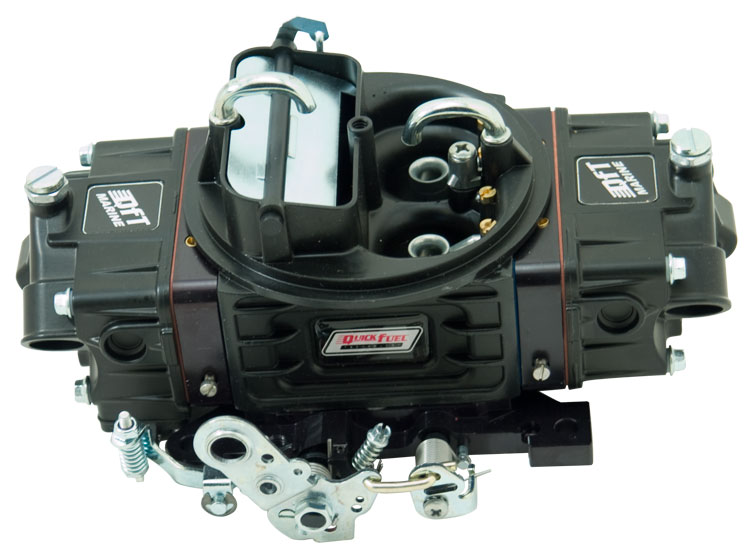
If it looks like a duck and quacks like a duck, it must be a duck. Right? Well, maybe. Carburetors are carburetors, but only marine carburetors should be used on boats. It's true that marine carburetors started life as regular automotive carburetors but then each took divergent paths. Marine carburetors have certain modifications that make them uniquely adaptable and legal for marine usage. "Legal" meaning that it has the ability to pass the U.S. Coast Guard test for marine carburetors. Folks, I'm not talking about Paris Island here, either. The main qualification that a marine carburetor must meet (as set down by the U.S. Coast Guard) is that if the carburetor should "flood" only .5cc of fuel is allowed to escape in a period of 30 seconds. There's also a "backfire" test which confirms the ability of carburetors/flame arrestor combination to contain the backfire. For this reason a gasket is not used between the carburetor air horn flange and the flame arrestor. It's possible that this gasket could become saturated with fuel (if the carburetor should flood) and become a potential fire source as a result. The primary areas of a carburetor that require some sort of modification to meet these requirements include the fuel bowl vent tubes and throttle shafts. The vent tubes of a marine carburetor are bent inwards so that the tube looks like an inverted "J". These tubes oftentimes are referred to as "J" tubes, as a result. The reason for bending the tubes inward is that if flooding should occur, the fuel that would normally come out of the fuel bowl vent tube is rerouted back into the carburetor. Throttle shafts also get special machining attention. Shafts are "grooved" and "slabbed" to prevent fuel from exiting out the throttle shaft if flooding should occur. When a carburetor floods fuel will end up "puddling" on the throttle plates. A non-marine carburetor will allow this fuel to seep out of the throttle shaft ends and onto the manifold. This is not allowed on a marine carburetor because normally the engine is situated in an enclosed bilge where potentially deadly gasoline fuel fumes can accumulate. Throttle shafts that are "grooved" and "slabbed" channel the flooded fuel safely down into the intake manifold. With no raw fuel allowed to puddle on the manifold outside the carburetor, there is no chance of deadly fuel fumes to accumulate in the bilge and no chance of explosion or fire. For these reasons an automotive carburetor should NEVER be used in a marine application.
Quick Fuel
Carburetors |
|